
News
Abstract
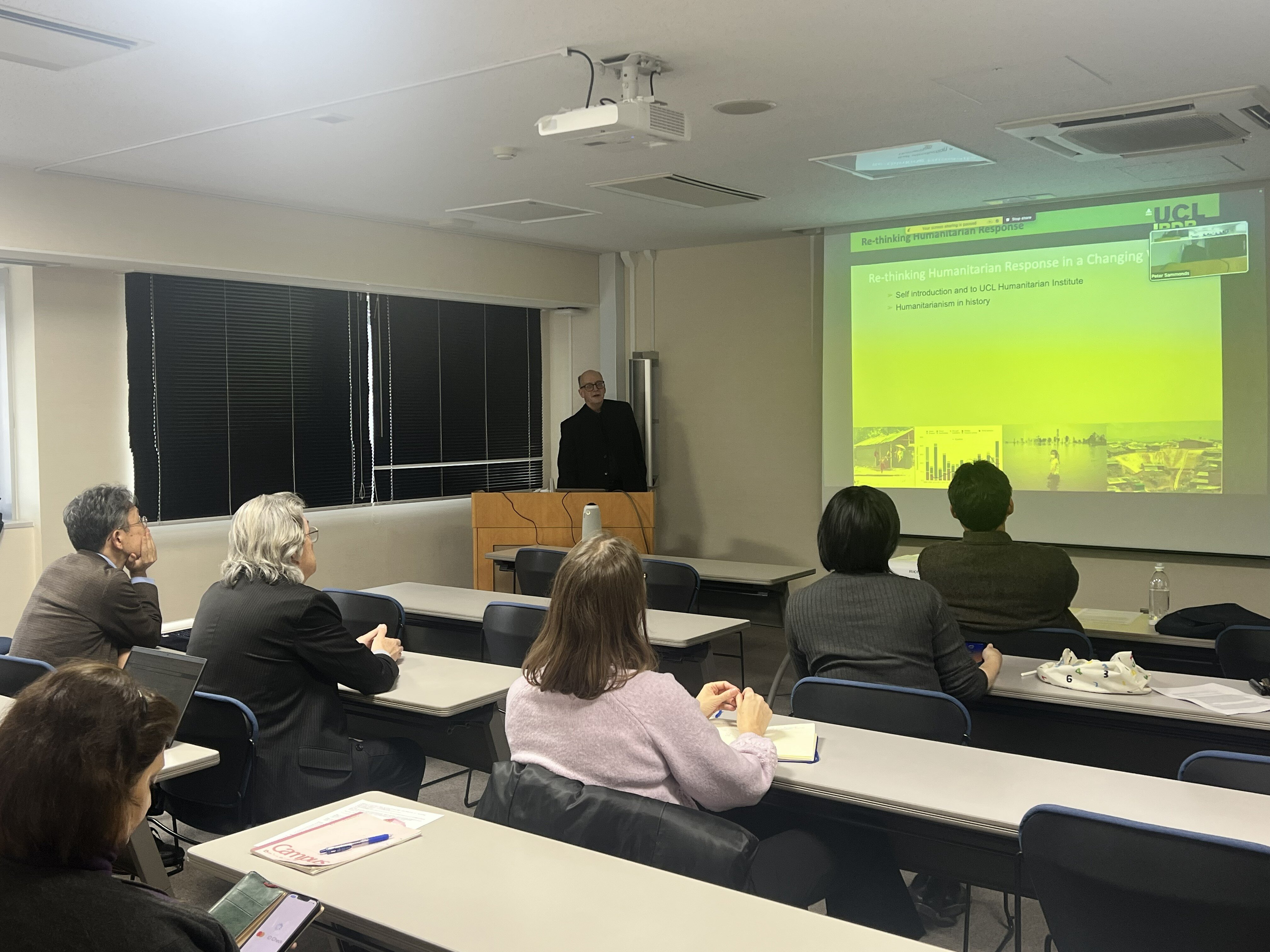
The contemporary approach to Humanitarianism started during the Nigerian Civil War over Biafra from 1967-1970. Doctors, led by Bernard Kouchner, concluded that a new approach was needed that would ignore political / religious boundaries and prioritise the welfare of victims. Principles of humanitarian relief have remained largely unchanged since they were formalized during this period. There is widespread speculation that the post WWII settlement that produced the international institutions and agreements though which humanitarian response has been governed, such as the United Nations and the 1951 Refugee Convention, is breaking down. This talk looks at two contemporary, but contrasting case studies when disasters occur in zones of armed conflict. 1) Disasters in Kashmir in the border conflict zone between Indian and Pakistan and, 2) disasters in Myanmar, with a focus on the 2025 earthquake, which occurred during protracted civil war. The talk addresses the compounding challenges of conflict and disaster, and the lessons that can be learned for humanitarian response when power politics come to the fore and humanitarian budgets are being slashed. It poses the question what can universities do in research and practitioner engagement to address the new challenges.
Peter Sammonds is Professor of Geophysics and Climate Risks. He was the founding Director and first Head of Department of the UCL Institute for Risk and Disaster Reduction (now Department) and founding Director of the UCL Humanitarian Institute. His research on natural hazard risks, disasters and recovery is at the interface between natural and social sciences. He has recently led Royal Society, British Academy and UK research council-funded projects on Increasing Resilience to Environmental Hazards in Border Conflict Zones in northern India; on Resilience Futures for the Rohingya Refugees in Bangladesh; and on Hurricane multi-hazard risk assessment in the Caribbean. He has also worked on earthquake and volcano mechanics, and ice physics in the Arctic and Antarctic. Peter has advised the UK research councils on the increasing resilience to natural hazards program; delivered policy advice to governments; been a member of EEFIT Earthquake Engineering Field Investigation teams; acted on the UCL-Lancet Commission on Migration and Health. He was the Gender and Intersectionality Ambassador for the UKRI network+ GRRIPP project led by the IRDR Centre for Gender and Disaster.
News & Events